Get AirBeam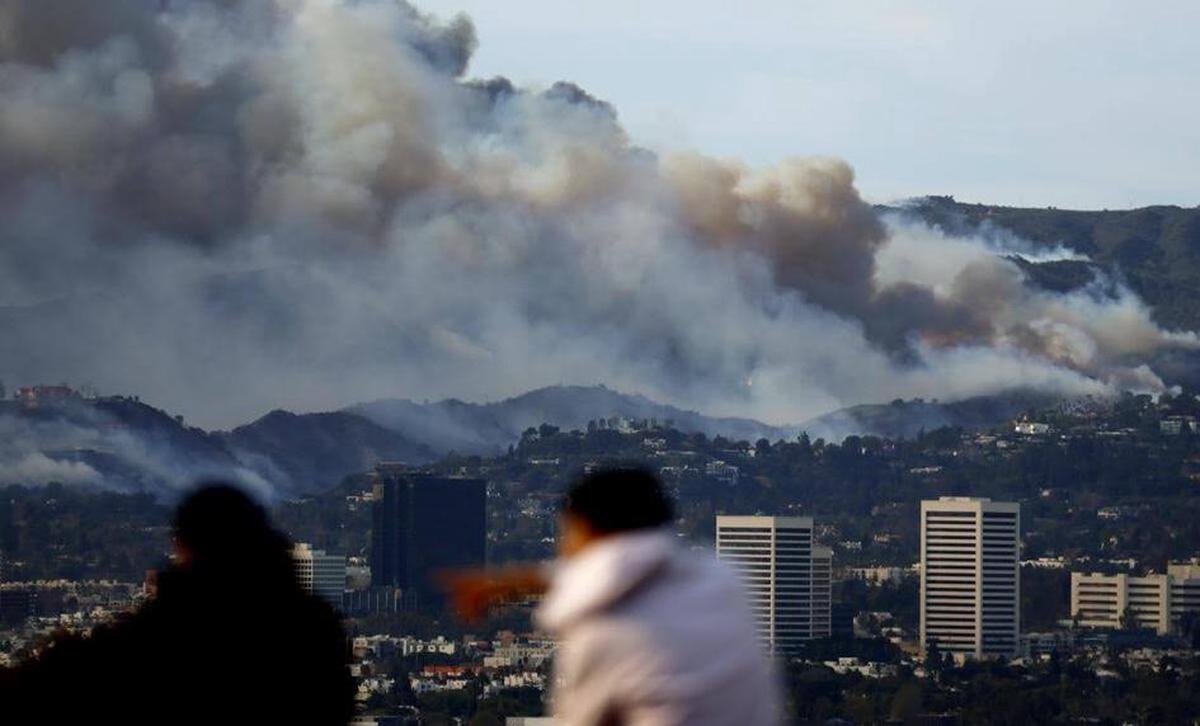
If it feels like wildfire smoke is showing up in more places, more often, and sticking around longer, you’re not imagining it. This summer alone, smoke from Canadian wildfires pushed air quality into record-breaking territory across the Midwest and Northeast, turning skies orange from Minneapolis to New York City and prompting health alerts in sixteen states. For a growing number of Americans, wildfire season no longer means something that happens to someone else, somewhere else. Smoke drifts hundreds of miles from the fire itself, so even if you never see flames, you still breathe the consequences, which is why checking the Air Quality Index (AQI) before opening a window has become part of daily life.
Here’s what’s actually happening, why it’s becoming the norm rather than the exception, and what you can do to protect the air you and your family breathe indoors, where most of us spend the majority of our time.
A summer of record-breaking smoke
In mid-July 2026, more than 800 active wildfires burning across northern Ontario sent smoke thousands of miles into the United States, blanketing the Midwest and Northeast in haze for days. The numbers were staggering: Duluth, Minnesota recorded a 24-hour AQI of 934 for PM2.5 — more than three times the threshold for “Hazardous” air, and nearly six times higher than the city’s previous all-time record. Fifty monitors across five states registered “Hazardous” readings, the most severe category on the AQI scale, reserved for conditions where the entire population is at risk. The EPA’s AQI scale technically tops out at 500 (the highest ‘Hazardous’ breakpoint), but when pollutant concentrations exceed the levels the scale was built for, agencies extrapolate the same linear formula beyond 500 to produce these ‘off-the-chart’ readings — meaning Duluth’s air wasn’t just hazardous, it was hazardous by a factor the scale was never designed to measure.
Meanwhile, the D.C.–Baltimore region saw daily average PM2.5 concentrations approach 200 micrograms per cubic meter, a level so extreme it triggered “Code Purple” alerts. New York, New Jersey, Pennsylvania, Ohio, and a dozen other states dealt with “unhealthy” air and widespread haze as the smoke oscillated back and forth across the region for nearly a week before storms finally washed the particles out of the sky.
This wasn’t an isolated event. It followed a now-familiar pattern set by the historic 2023 Canadian wildfire season, when smoke exposure across the U.S. reached levels unlike anything researchers had measured going back to 2006, even though wildfire activity in the western U.S. that year was near historic lows. The culprit both times: out-of-control fires in Canada, carried south and east by upper-level wind patterns.
Does closing your windows actually keep the smoke out?
Not entirely, and that’s the part that catches most people off guard.
Closing your windows and running an air purifier is good practice, but without a way to actually measure what’s happening indoors, you’re guessing. Outdoor AQI tells you what’s happening outside your door, not what’s actually in the air you’re breathing at your kitchen table. Even sealed-up homes see outdoor smoke infiltrate indoors.
That’s the exact gap AirBeam is built to close. Instead of assuming your filtration setup is working, AirBeam gives you an actual reading, in real time, right where you live. It shows you whether your indoor air is holding steady in “good” territory or creeping into “unhealthy,” so you know whether it’s time to add another filter, seal a gap, or move your family into a clean-air room. During a multi-day smoke event, that kind of visibility is the difference between hoping your home is protecting you and knowing it is.
As smoke events become a more regular part of summer for more of the country, keeping an eye on air quality is quickly becoming as routine as checking the weather. With AirBeam, that visibility isn’t a guess or an afterthought. It’s a real-time reading, always on, always yours.
Is wildfire smoke dangerous for your health?
Yes, and the reason comes down to what’s actually in the smoke. Wildfire smoke is a mix of gases and fine particulate matter, but the pollutant of greatest concern is PM2.5: particles so small they can lodge deep in the lungs and even pass into the bloodstream. The EPA sets a 24-hour PM2.5 exposure limit of 35 micrograms per cubic meter; during events like this summer’s, some cities saw readings 20 to 30 times that limit. Children, older adults, pregnant people, and anyone with heart or lung conditions face the highest risk, but at hazardous levels, smoke is a concern for everyone.
A few evidence-based steps make a real difference:
- Know your air quality before you plan your day. Check your local air quality with the AirCasting map or a real-time AirBeam Mini monitor before deciding whether to head outside, send kids to outdoor practice, or open your windows.
- Close up and filter. Keep windows and doors shut during smoke events. If you have central air or a forced-air furnace, switch to a high-efficiency filter (MERV 13 or the highest your system supports) and run the fan continuously.
- Add portable filtration. A HEPA air purifier sized for your room, or a DIY box-fan-and-filter setup, can meaningfully cut indoor particle levels, even in a leaky older home.
- Create a clean-air room. Pick a room with few windows and no fireplace, run a portable air cleaner there, and spend more of your time in that space during the worst of an event.
- Skip the extra pollution sources. Skip the extra pollution sources. Frying food, vacuuming, burning candles, and smoking all add particles to indoor air that are worth avoiding until conditions improve.
How long does wildfire smoke stick around?
That depends on the fire, the wind, and your walls. Outdoors, a single smoke event can linger for days: this summer’s stretch of haze oscillated back and forth across the Midwest and Northeast for nearly a week before storms finally cleared it out.
Indoors, smoke sticks around longer than most people expect. Indoor PM2.5 typically runs at roughly half to 60% of outdoor levels during smoke events, which is still often unhealthy, and it won’t clear on its own the moment the sky outside looks better. That’s part of why a real-time indoor reading matters more than a quick glance out the window.
Why is wildfire smoke becoming the new normal?
The science behind the trend is straightforward, even if the consequences are not. As global temperatures rise, the atmosphere becomes “thirstier”—it can hold and pull more moisture out of the air, soil, and vegetation. That drying effect leaves forests primed to burn, and when fires do ignite, they grow faster, burn hotter, and produce far more smoke. Climate attribution researchers have found that the extreme heat fueling many of 2026’s fires was made dramatically more likely by human-caused climate change.
It’s not just heat. Warmer winters mean earlier snowmelt and drier summers, extending the fire season on both ends. Drought conditions are becoming more frequent and severe. Forest pests like bark beetles and invasive species like cheatgrass are killing trees and adding fuel to the fire, quite literally. The National Interagency Fire Center’s 2026 seasonal outlook flagged above-normal wildfire risk not just in the traditional fire-prone West, but across Texas, Florida, Georgia, and the Carolinas, which is a signal that this is no longer a regional problem.
The satellite record backs this up. NASA’s Terra and Aqua satellites scan for active fires twice daily, and a 21-year analysis of that data found that the most extreme wildfire behavior worldwide (the fastest-growing, most intense fires) has more than doubled in frequency. The steepest increases showed up in two specific places: the temperate conifer forests of the western U.S. and the boreal forests stretching across northern North America and Russia, the exact regions now sending smoke into U.S. cities that never used to think about wildfire season. One factor researchers point to is warmer nighttime temperatures, which used to give firefighters a natural break as fires calmed down after dark. Now, fires increasingly keep burning through the night, giving crews less opportunity to gain control before the next day’s heat arrives.
Perhaps the most unsettling part: 2023’s record smoke exposure happened during a relatively quiet fire year out West. It didn’t take a “worse” fire season to produce historic air quality impacts, it just took the smoke traveling somewhere new. That’s the pattern to watch. As fires become more intense and long-range smoke transport becomes more common, communities like Duluth, Chicago, New York, and Washington D.C. that have never thought of themselves as “wildfire country” are increasingly on the front lines of smoke exposure.
What to expect going forward
Fire and climate researchers agree: this isn’t a one-time thing. Fire risk is spreading to more of the country, fire seasons are starting earlier and lasting longer, and smoke is traveling farther - sometimes thousands of miles - to affect places that never used to worry about it. For most Americans, that means smoke exposure is no longer just a western, once-in-a-while problem. It’s becoming a recurring, nationwide one.
The takeaway: being smoke-ready shouldn’t depend on the season or where you live. It’s worth making part of your household’s routine.