Get AirBeam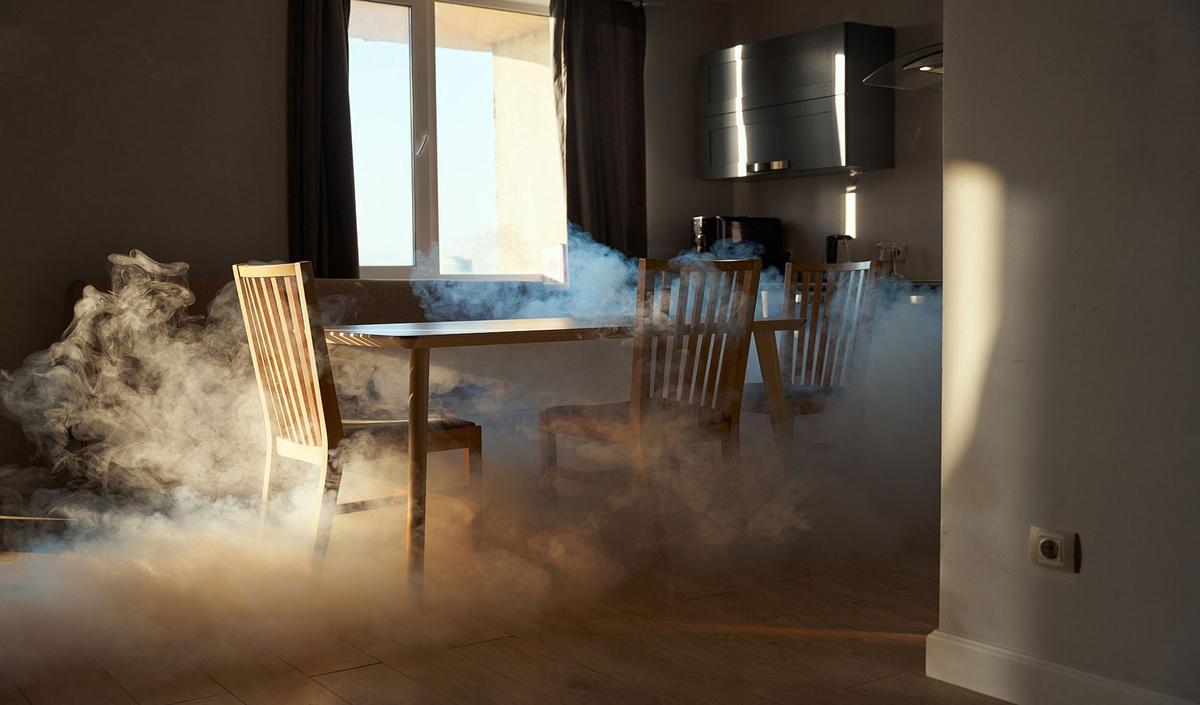
Most people picture air pollution as something that happens outside: traffic exhaust, factory smoke, wildfire haze drifting in from somewhere else. And the outdoor picture is genuinely alarming. The American Lung Association’s 2026 State of the Air report found that 44% of Americans, more than 152 million people, live in counties that failed at least one air quality measure, with nearly half of U.S. children breathing unhealthy air where they live.
The health stakes are serious and well documented. Particle pollution is linked to lung cancer, heart attacks, strokes, and early death. Even short-term exposure can worsen asthma and other respiratory diseases.
But some of the biggest pollution spikes in the average day don’t come from outside at all. They come from ordinary things we do at home without a second thought. And because indoor air isn’t graded or reported the way outdoor air is, it’s much easier to overlook.
What causes indoor air pollution?
The Environmental Protection Agency (EPA) has found that indoor air pollutant levels are typically 2 to 5 times higher than outdoor levels, and during certain activities, they can spike to more than 100 times higher. Americans also spend about 90% of their time indoors, making indoor air an important part of our overall exposure.
Many of the biggest sources aren’t things we typically think of as “pollution.” They’re everyday habits: cooking dinner, lighting a candle, spraying a cleaning product, or burning something in the kitchen.
Here are some of the most common sources, and what happens when you bring them into a small indoor space.
Can burnt toast make your indoor air unhealthy?
That smoking piece of toast isn’t just a breakfast fail. It’s a small combustion event happening a few feet from your face.
When food chars, it releases fine particulate matter (PM2.5), particles small enough to travel deep into your lungs. Burnt or charred food can also release acrolein and other irritant compounds that can sting your eyes and throat.
The scale is easy to underestimate. Research on household cooking has found that cooking causes large, recurring PM2.5 spikes that barely register in daily averages, which is why they’re so easy to miss. Charring food makes those spikes worse, and in a closed kitchen with little ventilation, the particles can linger in the air after the visible smoke has cleared.
If your kitchen fills with smoke, ventilation matters. Turn on your range hood if it vents outside, and open a window when outdoor air quality is good.
Do candles pollute indoor air?
The candle you light to make your apartment smell like a spa is also adding particles and chemicals to the air.
Burning candles releases fine particulate matter and volatile organic compounds (VOCs), along with fragrance compounds. In a controlled 2025 study, a single scented candle raised nearby PM2.5 to roughly 26 to 31 micrograms per cubic meter within half an hour. You can smell the fragrance, but you can’t necessarily smell everything else being released.
The details matter, too. Longer, untrimmed wicks can produce more soot and particulate matter than a trimmed wick. Different waxes can also produce different emissions, although no candle type is completely emission-free.
And some particle emissions can occur after a candle is extinguished, while the wick is still smoldering.
An occasional candle isn’t necessarily cause for alarm. But burning candles frequently in a small, poorly ventilated room can add to your indoor particle exposure.
If you do burn candles, keep the wick trimmed and ventilate the room. Or skip combustion altogether with an electric wax warmer.
Are cleaning sprays bad for indoor air?
Reaching for a spray bottle to wipe down a counter feels like a health-positive move. But many conventional cleaning products release volatile organic compounds into the air when they’re sprayed.
Aerosolized sprays can be especially easy to inhale because they disperse directly into the air rather than staying on a surface.
The American Lung Association identifies fumes from cleaning products, particularly products containing VOCs and added fragrance, as potential asthma triggers. Some research has also linked regular exposure to cleaning-product emissions with respiratory effects.
Fragrance can be particularly complicated. A label that simply says “fragrance” can represent a mixture of many different chemical compounds, some of which can irritate the respiratory system. Even naturally derived fragrance compounds can set off chemical reactions in indoor air that form new pollutants.
When you can, choose fragrance-free or low-VOC products and use a wipe or liquid cleaner instead of an aerosol spray.
Why does cooking create so much indoor air pollution?
Cooking is one of the most reliable sources of short-term indoor pollution spikes. Frying and sautéing can produce substantial amounts of PM2.5 and VOCs, with high-heat cooking generally creating more emissions than gentler methods such as boiling.
The numbers can be striking. In a study in a University of Texas test house, researchers found that cooking was the single largest source of indoor particle pollution, with PM2.5 exceeding 250 micrograms per cubic meter during some meals. For scale, the EPA’s limit for a 24-hour average is 35, and the World Health Organization’s air quality guidelines recommend 15.
Two factors have a particularly strong effect: how you cook and how well you ventilate.
Gas stoves add another source of pollution because combustion can release nitrogen dioxide and carbon monoxide in addition to the particles and VOCs produced by the food itself.
Your range hood matters, too. If it vents outside, running it while you cook can remove pollutants before they spread through the rest of your home. If you don’t have an externally vented hood, opening a window can help when outdoor air quality is good.
Keep the fan running after you finish cooking, too. The same study found that exposure after cooking can exceed exposure during it, so a few extra minutes of ventilation helps clear what’s left.
Is indoor air pollution worse than outdoor air pollution?
It can be, but there isn’t one simple indoor-versus-outdoor answer.
Indoor pollution depends on what is happening inside your home, how well the space is ventilated, what pollutants are coming from outdoors, and how long you’re exposed to them.
The important point is that indoor pollution can change dramatically over the course of a day. A home might have relatively low particle levels in the morning, experience a sharp spike while cooking dinner, and return to lower levels afterward.
Outdoor air quality measurements can’t show you those changes inside your home.
How can you tell if your indoor air is polluted?
This is where air quality monitoring changes the equation.
You can’t fix what you can’t see, and many indoor pollution events are invisible. A low-cost, real-time monitor like the AirBeam Mini lets you watch PM2.5 levels change as they happen and connect those changes to what you’re actually doing.
You might see a spike when you start frying food, another when you burn something in the toaster, or a gradual increase while a candle burns.
That visibility changes the conversation. Instead of assuming your indoor air is fine because the room looks and smells clean, you can see when pollution levels rise and test which actions bring them back down.
What can you do to improve your indoor air?
You don’t need to overhaul how you live. A few small habits can reduce indoor pollution:
- Ventilate while cooking. Turn on a range hood or exhaust fan whenever you cook, and keep it running for a few minutes afterward.
- Open a window when outdoor air is clean. A few minutes of ventilation can help clear indoor pollutants, but check outdoor air quality first.
- Trim candle wicks. A shorter, controlled wick generally produces less soot than a long, untrimmed one.
- Reduce aerosol sprays. Choose wipes or liquid products when practical, and look for fragrance-free or low-VOC options.
- Pay attention to your cooking method. High-heat frying tends to create larger pollution spikes than gentler cooking methods.
- Monitor your air. A real-time monitor can show you which activities are actually changing the air in your home.
Indoor air pollution is easy to overlook precisely because it comes from things that feel ordinary. You cook dinner, light a candle, clean the kitchen, and move on with your day.
But once you can see what those activities are doing to the air around you, those invisible changes become much easier to understand, and easier to act on.
Want to see how the air in your home changes through the day? The AirBeam Mini shows you in real time, indoors and out.